| Join Community > Biocliff | Memorize 20 Amino Acids in 20 Minutes >>> Check Now! |
Showing posts with label MICROBIOLOGY. Show all posts

Sunday, August 10, 2014

Standard Methods for the Examination of Water and Wastewater


Analysts, researchers, and regulators have relied on this peer-reviewed publication since 1905, and it remains a trusted source of accurate, proven methodology for analyzing natural waters, water supplies, and wastewaters.

The book contains over 400 laboratory methods for the analysis of: Dissolved Solids,
Metals, Free and Total Chlorine, Odor, Taste, and Flavor Profile Analysis, Disinfection By-products, Radionuclides, Total Organic Carbon
and Total and Fecal Coliform.

The 22nd edition advances the science of water analysis with input and consensus of hundreds of water and wastewater experts from around the world. Laboratories worldwide rely on this comprehensive reference as a trusted source of accurate, proven methodology for analysis of water, water supplies, and wastewater. It is the essential resource.

The methods in the 22nd edition (as in previous editions) are believed to be the best available, generally accepted procedures for analyzing water, wastewater, and related materials. They represent the recommendations of specialists, ratified by a large number of analysts and others of more general expertise, and as such are truly consensus standards, offering a valid and recognized basis for control and evaluation.

All methods are dated to identify which ones changed significantly between editions.

New in the 22nd edition
*The Quality Control for Parts 2000 7000 has been expanded and significantly revised to make the methods more suitable for regulatory compliance.
*Twenty-two sections in Part 9000 Microbiological Examination were revised and new procedures added. These include information on viable but nonculturable bacteria, new information on the fluorogenic substrate test for E. coli, and an expansion of the section on identification of iron and sulfur bacteria.
* Flavor Profile Analysis for drinking water was expanded with an extended introduction and new taste-and-odor color wheel.
*The determination of metals using Inductively Coupled Plasma/Mass Spectrometry (ICP-MS) contains updated quality control requirements and added collision cell technology.
*Additional sampling, filtering, and storage requirements were added to UV-Absorbing Organic Constituents.
*New methods have been added for the determination of nitrosamines in drinking water.
*The method for radium was updated.
*The references and bibliography were updated for Part 8000 Toxicity.
*The section on plankton was revised to include more in-depth procedures for collecting and processing samples.
*New figures were added to Identification of Aquatic Organisms.


(Tip to download : click on SKIP AD Button on top right corner of download page after clicking "link1")
Download : LINK


Our Backpack Tales  /  at  4:05 PM  /  No comments


Analysts, researchers, and regulators have relied on this peer-reviewed publication since 1905, and it remains a trusted source of accurate, proven methodology for analyzing natural waters, water supplies, and wastewaters.

The book contains over 400 laboratory methods for the analysis of: Dissolved Solids,
Metals, Free and Total Chlorine, Odor, Taste, and Flavor Profile Analysis, Disinfection By-products, Radionuclides, Total Organic Carbon
and Total and Fecal Coliform.

The 22nd edition advances the science of water analysis with input and consensus of hundreds of water and wastewater experts from around the world. Laboratories worldwide rely on this comprehensive reference as a trusted source of accurate, proven methodology for analysis of water, water supplies, and wastewater. It is the essential resource.

The methods in the 22nd edition (as in previous editions) are believed to be the best available, generally accepted procedures for analyzing water, wastewater, and related materials. They represent the recommendations of specialists, ratified by a large number of analysts and others of more general expertise, and as such are truly consensus standards, offering a valid and recognized basis for control and evaluation.

All methods are dated to identify which ones changed significantly between editions.

New in the 22nd edition
*The Quality Control for Parts 2000 7000 has been expanded and significantly revised to make the methods more suitable for regulatory compliance.
*Twenty-two sections in Part 9000 Microbiological Examination were revised and new procedures added. These include information on viable but nonculturable bacteria, new information on the fluorogenic substrate test for E. coli, and an expansion of the section on identification of iron and sulfur bacteria.
* Flavor Profile Analysis for drinking water was expanded with an extended introduction and new taste-and-odor color wheel.
*The determination of metals using Inductively Coupled Plasma/Mass Spectrometry (ICP-MS) contains updated quality control requirements and added collision cell technology.
*Additional sampling, filtering, and storage requirements were added to UV-Absorbing Organic Constituents.
*New methods have been added for the determination of nitrosamines in drinking water.
*The method for radium was updated.
*The references and bibliography were updated for Part 8000 Toxicity.
*The section on plankton was revised to include more in-depth procedures for collecting and processing samples.
*New figures were added to Identification of Aquatic Organisms.


(Tip to download : click on SKIP AD Button on top right corner of download page after clicking "link1")
Download : LINK


Wednesday, December 4, 2013

Wastewater Microbiology,Gabriel Bitton

The new edition of a classic reference incorporating the latest findings and discoveries The Third Edition of this classic reference provides readers with concise, up-to-the-moment coverage of the role of microorganisms in water and wastewater treatment. By providing a solid foundation in microbiology, microbial growth, metabolism, and nutrient cycling, the text gives readers the tools they need to make critical decisions that affect public health, as well as the practical aspects of treatment, disinfection, water distribution, bioremediation, and water and wastewater reuse. The publication begins a discussion of microbiology principles, followed by a discussion of public health issues and concerns. Next, the core of the text is dedicated to a thorough examination of wastewater and drinking water treatment, biosolids, pollution-control biotechnology, and drinking water distribution. The remainder of the text discusses toxicity testing in wastewater treatment plants, and the public health aspects of wastewater disposal and reuse. The many advances in wastewater and drinking water microbiology have all been thoroughly integrated into the publication, including: * A new chapter on bioterrorism and drinking water safety * The latest developments in biofilm microbial ecology and biofilm impact on drinking water quality * New, state-of-the-art detection techniques * Expanded and revised treatment of toxicity testing, including new testing methods and studies on endocrine disrupters in wastewater * Alternatives to conventional wastewater treatment New problem sets, which test readers' knowledge, as well as a list of Internet resources have been added to each chapter. In addition, the publication's extensive references have been thoroughly revised for readers who would like to learn more about the latest findings and discoveries on specialized topics. Finally, the color plate section has been expanded and contains many new illustrations and tables. An authoritative guide for all researchers, administrators, and engineers in the field of microbiology, Wastewater Microbiology, Third Edition is also a valuable reference for civil and environmental engineers, public health officials, and students involved in environmental engineering and science.

DOWNLOAD


Our Backpack Tales  /  at  7:00 PM  /  1 comment

The new edition of a classic reference incorporating the latest findings and discoveries The Third Edition of this classic reference provides readers with concise, up-to-the-moment coverage of the role of microorganisms in water and wastewater treatment. By providing a solid foundation in microbiology, microbial growth, metabolism, and nutrient cycling, the text gives readers the tools they need to make critical decisions that affect public health, as well as the practical aspects of treatment, disinfection, water distribution, bioremediation, and water and wastewater reuse. The publication begins a discussion of microbiology principles, followed by a discussion of public health issues and concerns. Next, the core of the text is dedicated to a thorough examination of wastewater and drinking water treatment, biosolids, pollution-control biotechnology, and drinking water distribution. The remainder of the text discusses toxicity testing in wastewater treatment plants, and the public health aspects of wastewater disposal and reuse. The many advances in wastewater and drinking water microbiology have all been thoroughly integrated into the publication, including: * A new chapter on bioterrorism and drinking water safety * The latest developments in biofilm microbial ecology and biofilm impact on drinking water quality * New, state-of-the-art detection techniques * Expanded and revised treatment of toxicity testing, including new testing methods and studies on endocrine disrupters in wastewater * Alternatives to conventional wastewater treatment New problem sets, which test readers' knowledge, as well as a list of Internet resources have been added to each chapter. In addition, the publication's extensive references have been thoroughly revised for readers who would like to learn more about the latest findings and discoveries on specialized topics. Finally, the color plate section has been expanded and contains many new illustrations and tables. An authoritative guide for all researchers, administrators, and engineers in the field of microbiology, Wastewater Microbiology, Third Edition is also a valuable reference for civil and environmental engineers, public health officials, and students involved in environmental engineering and science.

DOWNLOAD


Posted in: , Read Complete Article»

Tuesday, December 3, 2013

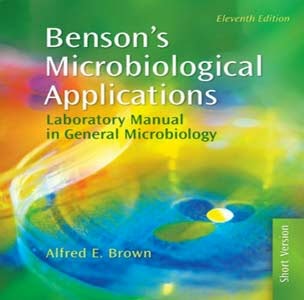
BENSON’S MICROBIOLOGICAL APPLICATIONS: LABORATORY MANUAL IN GENERAL MICROBIOLOGY


The classic resource for undergraduate microbiology laboratory courses just keeps getting better. The 60 self-contained clearly illustrated exercises, and four-color format makes Microbiological Applications: Laboratory Manual in General Microbiology, the ideal lab manual. Appropriate for either a majors or non-majors lab course, this lab manual assumes no prior organic chemistry course has been taken.

Table of Content

Part 1 Microscopy

Exercise 1 Brightfield Microscopy
Exercise 2 Darkfield Microscopy
Exercise 3 Phase-Contrast Microscopy
Exercise 4 Microscopic Measurements


Part 2 Survey of Microorganisms

Exercise 5 Protozoans, Algae, and Cyanobacteria
Exercise 6 Ubiquity of Bacteria
Exercise 7 The Fungi: Yeasts and Molds

Part 3 Manipulation of Microorganisms

Exercise 8 Aseptic Technique
Exercise 9 Pure Culture Techniques

Part 4 Staining and Observation of Microorganisms

Exercise 10 Smear Preparation
Exercise 11 Simple Staining
Exercise 12 Negative Staining
Exercise 13 Capsular Staining
Exercise 14 Gram Staining
Exercise 15 Spore Staining: Two Methods
Exercise 16 Acid-Fast Staining: Ziehl-Neelsen Method
Exercise 17 Motility Determination

Part 5 Culture Methods


Exercise 18 Culture Media Preparation
Exercise 19 Cultivation of Anaerobes
Exercise 20 Enumeration of Bacteria: The Standard Plate Count
Exercise 21 Slime Mold Culture
Exercise 22 Slide Culture: Molds

Part 6 Bacterial Viruses

Exercise 23 Determination of a Bacteriophage Titer
Exercise 24 Isolation of Phage from Flies
Exercise 25 Phage Typing

Part 7 Enviornmental Influences and Control of Microbial Growth

Exercise 26 Temperature: Effects on Growth
Exercise 27 Temperature: Lethal Effects
Exercise 28 pH and Microbial Growth
Exercise 29 Water Activity and Osmotic Pressure
Exercise 30 Ultraviolet Light: Lethal Effects
Exercise 31 Oligodynamic Action
Exercise 32 Evaluation of Alcohol: Its Effectiveness As an Antiseptic
Exercise 33 Antimicrobic Sensitivity Testing: The Kirby-Bauer Method
Exercise 34 Evaluation of Antiseptics: The Filter Paper Disk Method
Exercise 35 Effectiveness of Hand Scrubbing

Part 8 Identification of Unknown Bacteria

Exercise 36 Morphological Study of Unknown Bacterium
Exercise 37 Cultural Characteristics
Exercise 38 Physiological Characteristics: Oxidation and Fermentation Tests
Exercise 39 Physiological Characteristics: Hydrolytic and Degradative Reactions
Exercise 40 Physiological Characteristics: Multiple Test Media
Exercise 41 Use of Bergey’s Manual Part 9 Miniaturized Multitest Systems
Exercise 42 Enterobacteriaceae Identification: The API 20E System
Exercise 43 Enterobacteriaceae Identification: The Enterotube II System
Exercise 44 O/F Gram-Negative Rods Identification: The Oxi/Ferm Tube II System
Exercise 45 Staphyococcus Identification: The API Staph-Ident System

Part 10 Diversity and Environmental Microbiology

Exercise 46 Bacterial Counts of Foods
Exercise 47 Bacteriological Examination of Water: Qualitative Tests
Exercise 48 The Membrane Filter Method
Exercise 49 Reductase Test
Exercise 50 Microbial Spoilage of Canned Food
Exercise 51 Microbiology of Alcohol Fermentation

Part 11 Medical Microbiology and Immunology

Exercise 52 The Staphylococci: Isolation and Identification
Exercise 53 The Streptococci: Isolation and Identification
Exercise 54 Gram-Negative Intestinal Pathogens
Exercise 55 Slide Agglutination Test: Serological Typing
Exercise 56 Slide Agglutination (Latex) Test: For S. aureus Identification
Exercise 57 Tube Agglutination Test: The Heterophile Antibody Test
Exercise 58 White Blood Cell Study: The Differential WBC Count
Exercise 59 Blood Grouping Exercise 60 A Synthetic Epidemic

DOWNLOAD


OR


OR


Our Backpack Tales  /  at  5:50 PM  /  No comments


The classic resource for undergraduate microbiology laboratory courses just keeps getting better. The 60 self-contained clearly illustrated exercises, and four-color format makes Microbiological Applications: Laboratory Manual in General Microbiology, the ideal lab manual. Appropriate for either a majors or non-majors lab course, this lab manual assumes no prior organic chemistry course has been taken.

Table of Content

Part 1 Microscopy

Exercise 1 Brightfield Microscopy
Exercise 2 Darkfield Microscopy
Exercise 3 Phase-Contrast Microscopy
Exercise 4 Microscopic Measurements


Part 2 Survey of Microorganisms

Exercise 5 Protozoans, Algae, and Cyanobacteria
Exercise 6 Ubiquity of Bacteria
Exercise 7 The Fungi: Yeasts and Molds

Part 3 Manipulation of Microorganisms

Exercise 8 Aseptic Technique
Exercise 9 Pure Culture Techniques

Part 4 Staining and Observation of Microorganisms

Exercise 10 Smear Preparation
Exercise 11 Simple Staining
Exercise 12 Negative Staining
Exercise 13 Capsular Staining
Exercise 14 Gram Staining
Exercise 15 Spore Staining: Two Methods
Exercise 16 Acid-Fast Staining: Ziehl-Neelsen Method
Exercise 17 Motility Determination

Part 5 Culture Methods


Exercise 18 Culture Media Preparation
Exercise 19 Cultivation of Anaerobes
Exercise 20 Enumeration of Bacteria: The Standard Plate Count
Exercise 21 Slime Mold Culture
Exercise 22 Slide Culture: Molds

Part 6 Bacterial Viruses

Exercise 23 Determination of a Bacteriophage Titer
Exercise 24 Isolation of Phage from Flies
Exercise 25 Phage Typing

Part 7 Enviornmental Influences and Control of Microbial Growth

Exercise 26 Temperature: Effects on Growth
Exercise 27 Temperature: Lethal Effects
Exercise 28 pH and Microbial Growth
Exercise 29 Water Activity and Osmotic Pressure
Exercise 30 Ultraviolet Light: Lethal Effects
Exercise 31 Oligodynamic Action
Exercise 32 Evaluation of Alcohol: Its Effectiveness As an Antiseptic
Exercise 33 Antimicrobic Sensitivity Testing: The Kirby-Bauer Method
Exercise 34 Evaluation of Antiseptics: The Filter Paper Disk Method
Exercise 35 Effectiveness of Hand Scrubbing

Part 8 Identification of Unknown Bacteria

Exercise 36 Morphological Study of Unknown Bacterium
Exercise 37 Cultural Characteristics
Exercise 38 Physiological Characteristics: Oxidation and Fermentation Tests
Exercise 39 Physiological Characteristics: Hydrolytic and Degradative Reactions
Exercise 40 Physiological Characteristics: Multiple Test Media
Exercise 41 Use of Bergey’s Manual Part 9 Miniaturized Multitest Systems
Exercise 42 Enterobacteriaceae Identification: The API 20E System
Exercise 43 Enterobacteriaceae Identification: The Enterotube II System
Exercise 44 O/F Gram-Negative Rods Identification: The Oxi/Ferm Tube II System
Exercise 45 Staphyococcus Identification: The API Staph-Ident System

Part 10 Diversity and Environmental Microbiology

Exercise 46 Bacterial Counts of Foods
Exercise 47 Bacteriological Examination of Water: Qualitative Tests
Exercise 48 The Membrane Filter Method
Exercise 49 Reductase Test
Exercise 50 Microbial Spoilage of Canned Food
Exercise 51 Microbiology of Alcohol Fermentation

Part 11 Medical Microbiology and Immunology

Exercise 52 The Staphylococci: Isolation and Identification
Exercise 53 The Streptococci: Isolation and Identification
Exercise 54 Gram-Negative Intestinal Pathogens
Exercise 55 Slide Agglutination Test: Serological Typing
Exercise 56 Slide Agglutination (Latex) Test: For S. aureus Identification
Exercise 57 Tube Agglutination Test: The Heterophile Antibody Test
Exercise 58 White Blood Cell Study: The Differential WBC Count
Exercise 59 Blood Grouping Exercise 60 A Synthetic Epidemic

DOWNLOAD


OR


OR


Posted in: , , Read Complete Article»

Friday, September 27, 2013

Brock Biology of Microorganisms

The authoritative #1 textbook for introductory majors microbiology, Brock Biology of Microorganisms continues to set the standard for impeccable scholarship, accuracy, and outstanding illustrations and photos. This book for biology, microbiology, and other science majors balances cutting edge research with the concepts essential for understanding the field of microbiology.

In addition to a new co-author, David Stahl, who brings coverage of cutting edge microbial ecology research and symbiosis to a brand new chapter (Chapter 25), a completely revised overview chapter on Immunology (Chapter 28), a new “Big Ideas” section at the end of each chapter, and a wealth of new photos and art make the Thirteenth Edition better than ever. Brock Biology of Microorganisms speaks to today’s students while maintaining the depth and precision science majors need.

Features

An evolutionary theme integrated throughout enables instructors to convey the modern view of evolution and gives students material that has been unified within a consistent and thematic context, making concepts easier to grasp.

Units 1 and 2 are organized around foundational topics, providing an overview for the course and giving instructors flexibility to teach the later units in any order they wish.

Unique coverage on Archael and Eukaryotic Molecular Biology (Chapter 7) gives instructors material they won’t find anywhere else.


Unparalleled illustration and photo program gives students a clear and fascinating view into the microbial world. Illustrations and photos are often paired in a single figure to give students an idealized view next to a realistic view and to reinforce the connection between theory and practice.

Microbial Sidebars, richly illustrated vignettes, present interesting topical material related to a chapter’s central theme. Several new sidebars that cover relevant and cutting-edge techniques including CRISPR Anti-Viral Defense System, Combinatorial Fluorescence Labeling, Bacterial Genomes, and Microbial Symbionts of Fungus-Cultivating Ants.

New To This Edition

New co-author Dave Stahl brings his unique expertise to the book by expanding and updating the Microbial Ecology coverage and writing a brand new chapter on Symbiosis (Chapter 25). Chapters 22-24 are heavily revised to incorporate recent changes in this field.

New Symbiosis chapter (Chapter 25) ties the core topics of the book–health, diversity, and the human ecosystem–into one central place.

New Big Ideas sections at the end of each chapter review the core principles in the chapter by summarizing each section in 2-3 sentences.

New MiniQuizzes are critical thinking questions that appear after every section within the chapters and signal students to stop, review, and check their understanding before proceeding to the next section.

A thoroughly updated art program ensures that a consistent style is applied throughout the text and makes the art more accessible to students. Art revisions include new styles for cells and cell membranes so that they look more dimensional and realistic; new dimensional style for DNA so that gene regions are more clearly identified and easier to read; metabolism figures and other pathway processes have been simplified and now include colored type to enhance ease of reading; and the figurative art is new to look more dimensional and consistent.


The Immunology coverage in chapter 28 has been revised to present an overview of the fundamental concepts. This chapter allows instructors to cover immunology at a generalized level. Instructors that like to go into more detail can build on the core principles taught in Chapter 28 by covering Immune Mechanisms (Chapter 29) and Molecular Immunology (Chapter 30).

Expanded coverage of Genomics appears in the Virology and Genetics section.

Quantitative questions have been added to the website to allow students to test their knowledge at a higher level.

These questions are completely new and are available at the MyMicrobiologyPlace™ website.

Expanded coverage of hot topics—such as emerging infectious diseases, biofilms, and genomics—provides exciting material to draw students in to the content.


DOWNLOAD

LINK1


Our Backpack Tales  /  at  7:00 PM  /  No comments

The authoritative #1 textbook for introductory majors microbiology, Brock Biology of Microorganisms continues to set the standard for impeccable scholarship, accuracy, and outstanding illustrations and photos. This book for biology, microbiology, and other science majors balances cutting edge research with the concepts essential for understanding the field of microbiology.

In addition to a new co-author, David Stahl, who brings coverage of cutting edge microbial ecology research and symbiosis to a brand new chapter (Chapter 25), a completely revised overview chapter on Immunology (Chapter 28), a new “Big Ideas” section at the end of each chapter, and a wealth of new photos and art make the Thirteenth Edition better than ever. Brock Biology of Microorganisms speaks to today’s students while maintaining the depth and precision science majors need.

Features

An evolutionary theme integrated throughout enables instructors to convey the modern view of evolution and gives students material that has been unified within a consistent and thematic context, making concepts easier to grasp.

Units 1 and 2 are organized around foundational topics, providing an overview for the course and giving instructors flexibility to teach the later units in any order they wish.

Unique coverage on Archael and Eukaryotic Molecular Biology (Chapter 7) gives instructors material they won’t find anywhere else.


Unparalleled illustration and photo program gives students a clear and fascinating view into the microbial world. Illustrations and photos are often paired in a single figure to give students an idealized view next to a realistic view and to reinforce the connection between theory and practice.

Microbial Sidebars, richly illustrated vignettes, present interesting topical material related to a chapter’s central theme. Several new sidebars that cover relevant and cutting-edge techniques including CRISPR Anti-Viral Defense System, Combinatorial Fluorescence Labeling, Bacterial Genomes, and Microbial Symbionts of Fungus-Cultivating Ants.

New To This Edition

New co-author Dave Stahl brings his unique expertise to the book by expanding and updating the Microbial Ecology coverage and writing a brand new chapter on Symbiosis (Chapter 25). Chapters 22-24 are heavily revised to incorporate recent changes in this field.

New Symbiosis chapter (Chapter 25) ties the core topics of the book–health, diversity, and the human ecosystem–into one central place.

New Big Ideas sections at the end of each chapter review the core principles in the chapter by summarizing each section in 2-3 sentences.

New MiniQuizzes are critical thinking questions that appear after every section within the chapters and signal students to stop, review, and check their understanding before proceeding to the next section.

A thoroughly updated art program ensures that a consistent style is applied throughout the text and makes the art more accessible to students. Art revisions include new styles for cells and cell membranes so that they look more dimensional and realistic; new dimensional style for DNA so that gene regions are more clearly identified and easier to read; metabolism figures and other pathway processes have been simplified and now include colored type to enhance ease of reading; and the figurative art is new to look more dimensional and consistent.


The Immunology coverage in chapter 28 has been revised to present an overview of the fundamental concepts. This chapter allows instructors to cover immunology at a generalized level. Instructors that like to go into more detail can build on the core principles taught in Chapter 28 by covering Immune Mechanisms (Chapter 29) and Molecular Immunology (Chapter 30).

Expanded coverage of Genomics appears in the Virology and Genetics section.

Quantitative questions have been added to the website to allow students to test their knowledge at a higher level.

These questions are completely new and are available at the MyMicrobiologyPlace™ website.

Expanded coverage of hot topics—such as emerging infectious diseases, biofilms, and genomics—provides exciting material to draw students in to the content.


DOWNLOAD

LINK1


Posted in: , , Read Complete Article»

Thursday, September 26, 2013

Microbiology – L. M. Prescott


Product Description

Prescott, Harley and Klein’s 5th edition provides a balanced, comprehensive introduction to all major areas of microbiology. Because of this balance, Microbiology, 5/e is appropriate for students preparing for careers in medicine, dentistry, nursing, and allied health, as well as research, teaching, and industry. Biology and chemistry are prerequisites. The Fifth Edition has been updated extensively to reflect the latest discoveries in the field.

About the Author
John Harley teaches Anatomy Physiology and General Biology at Eastern Kentucky University, Richmond, KY and is also co-author of Prescott/Harley/Klein Microbiology and the ASM Microbial Telecourse Study Guide. This text refers to an out of print or unavailable edition of this title.

Table of Contents

Part I Introduction to Microbiology
1 The History and Scope of Microbiology
2 The Study of Microbial Structure: Microscopy and Specimen Preparation
3 Procaryotic Cell Structure and Function
4 Eucaryotic Cell Structure and Function
Part II Microbial Nutrition, Growth, and Control
5 Microbial Nutrition
6 Microbial Growth
7 Control of Microorganisms by Physical and Chemical Agents
Part III Microbial Metabolism
8 Metabolism: Energy, Enzymes, and Regulation
9 Metabolism: Energy Release and Conservation
10 Metabolism: The Use of Energy in Biosynthesis
Part IV Microbial Molecular Biology and Genetics
11 Genes: Structure, Replication, and Mutation
12 Genes: Expression and Regulation
13 Microbial Recombination and Plasmids
Part V DNA Technology and Genomics
14 Recombinant DNA Technology
15 Microbial Genomics
Part VI The Viruses
16 The Viruses: Introduction and General Characteristics
17 The Viruses: Bacteriophages
18 The Viruses: Viruses of Eucaryotes
Part VII The Diversity of the Microbial World
19 Microbial Taxonomy and Phylogeny
20 The Archaea
21 Bacteria: The Deinococci and Nonproteobacteria Gram Negatives
22 Bacteria: The Proteobacteria
23 Bacteria: The Low G C Gram Positives
24 Bacteria: The High G C Gram Positives
25 The Fungi (Eumycota), Slime Molds, and Water Molds
26 The Algae
27 The Protozoa
Part VIII Ecology and Symbiosis
28 Microorganism Interactions and Microbial Ecology
29 Microorganisms in Aquatic Environments
30 Microorganisms in Terrestrial Environments
Part IX Nonspecific(Innate) Resistance and the Immune Response
31 Normal Microbiota and Nonspecific (Innate) Host Resistence
32 Specific (Adaptive) Immunity
33 Medical Immunology
Part X Microbial Diseases and Their Control
34 Pathogenicity of Microorganisms
35 Antimicrobial Chemotherapy
36 Clinical Microbiology
37 The Epidemiology of Infectious Disease
38 Human Diseases Caused by Viruses
39 Human Diseases Caused by Bacteria
40 Human Diseases Caused by Fungi and Protozoa
Part XI Food and Industrial Microbiology
41 Microbiology of Food
42 Industrial Microbiology and Biotechnology
Appendix I A Review of the Chemistry of Biological Molecules
Appendix II Common Metabolic Pathways
Appendix III Classification of Procaryotes According to the First Edition of Bergey’s Manual of Systematic Bacteriology
Appendix IV Classification of Procaryotes According to the Second Edition of Bergey’s Manual of Systematic Bacteriology
Appendix V Classification of Viruses

DOWNLOAD

LINK1 (7TH EDITION)

OR

LINK2 (5TH EDITION)

OR

LINK3 (5TH EDITION)


Our Backpack Tales  /  at  10:00 AM  /  1 comment


Product Description

Prescott, Harley and Klein’s 5th edition provides a balanced, comprehensive introduction to all major areas of microbiology. Because of this balance, Microbiology, 5/e is appropriate for students preparing for careers in medicine, dentistry, nursing, and allied health, as well as research, teaching, and industry. Biology and chemistry are prerequisites. The Fifth Edition has been updated extensively to reflect the latest discoveries in the field.

About the Author
John Harley teaches Anatomy Physiology and General Biology at Eastern Kentucky University, Richmond, KY and is also co-author of Prescott/Harley/Klein Microbiology and the ASM Microbial Telecourse Study Guide. This text refers to an out of print or unavailable edition of this title.

Table of Contents

Part I Introduction to Microbiology
1 The History and Scope of Microbiology
2 The Study of Microbial Structure: Microscopy and Specimen Preparation
3 Procaryotic Cell Structure and Function
4 Eucaryotic Cell Structure and Function
Part II Microbial Nutrition, Growth, and Control
5 Microbial Nutrition
6 Microbial Growth
7 Control of Microorganisms by Physical and Chemical Agents
Part III Microbial Metabolism
8 Metabolism: Energy, Enzymes, and Regulation
9 Metabolism: Energy Release and Conservation
10 Metabolism: The Use of Energy in Biosynthesis
Part IV Microbial Molecular Biology and Genetics
11 Genes: Structure, Replication, and Mutation
12 Genes: Expression and Regulation
13 Microbial Recombination and Plasmids
Part V DNA Technology and Genomics
14 Recombinant DNA Technology
15 Microbial Genomics
Part VI The Viruses
16 The Viruses: Introduction and General Characteristics
17 The Viruses: Bacteriophages
18 The Viruses: Viruses of Eucaryotes
Part VII The Diversity of the Microbial World
19 Microbial Taxonomy and Phylogeny
20 The Archaea
21 Bacteria: The Deinococci and Nonproteobacteria Gram Negatives
22 Bacteria: The Proteobacteria
23 Bacteria: The Low G C Gram Positives
24 Bacteria: The High G C Gram Positives
25 The Fungi (Eumycota), Slime Molds, and Water Molds
26 The Algae
27 The Protozoa
Part VIII Ecology and Symbiosis
28 Microorganism Interactions and Microbial Ecology
29 Microorganisms in Aquatic Environments
30 Microorganisms in Terrestrial Environments
Part IX Nonspecific(Innate) Resistance and the Immune Response
31 Normal Microbiota and Nonspecific (Innate) Host Resistence
32 Specific (Adaptive) Immunity
33 Medical Immunology
Part X Microbial Diseases and Their Control
34 Pathogenicity of Microorganisms
35 Antimicrobial Chemotherapy
36 Clinical Microbiology
37 The Epidemiology of Infectious Disease
38 Human Diseases Caused by Viruses
39 Human Diseases Caused by Bacteria
40 Human Diseases Caused by Fungi and Protozoa
Part XI Food and Industrial Microbiology
41 Microbiology of Food
42 Industrial Microbiology and Biotechnology
Appendix I A Review of the Chemistry of Biological Molecules
Appendix II Common Metabolic Pathways
Appendix III Classification of Procaryotes According to the First Edition of Bergey’s Manual of Systematic Bacteriology
Appendix IV Classification of Procaryotes According to the Second Edition of Bergey’s Manual of Systematic Bacteriology
Appendix V Classification of Viruses

DOWNLOAD

LINK1 (7TH EDITION)

OR

LINK2 (5TH EDITION)

OR

LINK3 (5TH EDITION)


Posted in: , , Read Complete Article»

Tuesday, September 24, 2013

Lippincott’s Illustrated Reviews, Microbiology, 3rd Edition

A MUST READ for mastering essential concepts in microbiology
Well-known and widely used for their hallmark illustrations, Lippincott’s Illustrated Reviews bring concepts to vibrant life. Students rely on LIR for quick review, easier assimilation, and understanding of large amounts of critical, complex material.
• Outline format and full-color illustrations: More than 400 color illustrations and color-coded summaries provide key information at a glance and helpful visual explanations
• Illustrated case studies and questions to support USMLE prep: Expanded discussions reinforce key concepts and review questions with detailed rationales allow for self-assessment
• New bookmark features mini-index of important microorganisms for quick and easy reference
“Microbiology can be an overwhelming topic, but the pictures, concise descriptions, and parallel structure of each chapter helps to make the subject easier to understand and digest.” – Amelia Keaton, medical student
“I think this book better meets the needs of the market because of its review chapters and disease summaries, its review questions, and its excellent photographs of clinical manifestations of microbial disease. I also found this book easier to read and study from.” – Devorah Segal, medical student
FREE online! (with purchase of the text)
• Interactive question bank for test-taking practice
• Fully searchable eBook for studying on-the-go


Customer Reviews
By Mohamed F. El-Hewie
Format:Paperback
After progressing in reading, the reader will get used to the generosity of the authors in their constant, yet might be odd, attempts to illustrate the subject matter, specially, the extended review summaries at the end of the book. The book strength lies in standardizing the review methods of classification of microorganism, of drug stacks used in treatment, and of microscopic and culture morphology.

Despite the reasonable flow of thoughts in the paragraphs of each subject, the book lacks highlighting of names of diseases, organisms, and methods that are left hidden in the maze of words. Thus, the student reader has to struggle with underlining and highlighting the dense text. For example, a long paragraph on selective, bacterial culture media contains five media names typed as plain text. That would require thorough re-reading, while reviewing, in order to memorize the five media. Thus, the authors abandoned the very premise of the book, which is “to review”, and left the reader with the burden of searching while reviewing.

The book lacks of adequate footnotes or paragraph notes in visible locations. As such, the book paragraphs are plain, dense, and burdensome. Though there are plenty of boxed highlighted concepts, and even funny cartoons, it appears that the authors dismissed the busy and somber mood of busy lifestyle of students and rather tended to the relaxed style of casual readers.

Although most of the graphic illustrations are useful and neat, there is a sense of naivety in making trivial illustrations that serve no higher cause than the obvious. For example, on modes of virus transmission, a figure shows placental, birth canal, and postpartum images of contact between the agent and fetus/baby. Nothing is gained from such simplistic graphing of the plain and obvious course of action. In displaying the microscopic slides and culture photos, the book wasted more space on the entitling of the medical illustrations than on making the slides and cultures large enough to be legible.

The book ventures into an odd and redundant way of describing bacterial classification using colored pie chart. The frequently repeated colored pie serves very little purpose compared to the space it occupied. Neither the portions of the pie correspond to any numeric value of the bacterial classes they represent, nor do the colors of the pie wedges serve any purpose other than decorating the book page. The same odd style of representation applies to the use of one-column tables that use multiple rows to compare two different types of organisms.


DOWNLOAD

LINK1

OR

LINK2


Our Backpack Tales  /  at  5:00 PM  /  No comments

A MUST READ for mastering essential concepts in microbiology
Well-known and widely used for their hallmark illustrations, Lippincott’s Illustrated Reviews bring concepts to vibrant life. Students rely on LIR for quick review, easier assimilation, and understanding of large amounts of critical, complex material.
• Outline format and full-color illustrations: More than 400 color illustrations and color-coded summaries provide key information at a glance and helpful visual explanations
• Illustrated case studies and questions to support USMLE prep: Expanded discussions reinforce key concepts and review questions with detailed rationales allow for self-assessment
• New bookmark features mini-index of important microorganisms for quick and easy reference
“Microbiology can be an overwhelming topic, but the pictures, concise descriptions, and parallel structure of each chapter helps to make the subject easier to understand and digest.” – Amelia Keaton, medical student
“I think this book better meets the needs of the market because of its review chapters and disease summaries, its review questions, and its excellent photographs of clinical manifestations of microbial disease. I also found this book easier to read and study from.” – Devorah Segal, medical student
FREE online! (with purchase of the text)
• Interactive question bank for test-taking practice
• Fully searchable eBook for studying on-the-go


Customer Reviews
By Mohamed F. El-Hewie
Format:Paperback
After progressing in reading, the reader will get used to the generosity of the authors in their constant, yet might be odd, attempts to illustrate the subject matter, specially, the extended review summaries at the end of the book. The book strength lies in standardizing the review methods of classification of microorganism, of drug stacks used in treatment, and of microscopic and culture morphology.

Despite the reasonable flow of thoughts in the paragraphs of each subject, the book lacks highlighting of names of diseases, organisms, and methods that are left hidden in the maze of words. Thus, the student reader has to struggle with underlining and highlighting the dense text. For example, a long paragraph on selective, bacterial culture media contains five media names typed as plain text. That would require thorough re-reading, while reviewing, in order to memorize the five media. Thus, the authors abandoned the very premise of the book, which is “to review”, and left the reader with the burden of searching while reviewing.

The book lacks of adequate footnotes or paragraph notes in visible locations. As such, the book paragraphs are plain, dense, and burdensome. Though there are plenty of boxed highlighted concepts, and even funny cartoons, it appears that the authors dismissed the busy and somber mood of busy lifestyle of students and rather tended to the relaxed style of casual readers.

Although most of the graphic illustrations are useful and neat, there is a sense of naivety in making trivial illustrations that serve no higher cause than the obvious. For example, on modes of virus transmission, a figure shows placental, birth canal, and postpartum images of contact between the agent and fetus/baby. Nothing is gained from such simplistic graphing of the plain and obvious course of action. In displaying the microscopic slides and culture photos, the book wasted more space on the entitling of the medical illustrations than on making the slides and cultures large enough to be legible.

The book ventures into an odd and redundant way of describing bacterial classification using colored pie chart. The frequently repeated colored pie serves very little purpose compared to the space it occupied. Neither the portions of the pie correspond to any numeric value of the bacterial classes they represent, nor do the colors of the pie wedges serve any purpose other than decorating the book page. The same odd style of representation applies to the use of one-column tables that use multiple rows to compare two different types of organisms.


DOWNLOAD

LINK1

OR

LINK2


Posted in: , Read Complete Article»

Saturday, September 21, 2013

Bailey & Scott’s Diagnostic Microbiology, 12th Edition

The new 12th edition of Bailey & Scott’s Diagnostic Microbiology solidifies its reputation as the classic text in the field of microbiology. This new edition features the same comprehensive, authoritative content and adds new and updated material throughout. The team of authors includes three well-respected clinical microbiologists, all of whom have experience both in the classroom and the clinical laboratory.

NEW TO THIS EDITION
Three NEW chapters:
General Considerations and Applications of Information Provided in Bacterial Sections of Part III explains explains the criteria for organism inclusion and how it should be used.
Bacterial Identification Flow Charts and Schemes: A Guide to Part III includes gram reaction, shape, arrangement, atmosphere preferred, oxidase and catalase reactions, among other decision points for various pathogens, creating a visual method of identifying and cross referencing organisms.
Sentinel Laboratory Response to Bioterrorism
A NEW section on clinical laboratory management
More case studies help to develop critical thinking skills, with answers in an appendix.
More photos of the major organisms have been included to help in identifying different organisms.


KEY FEATURES
A respected author team consists of three well-respected clinical microbiologists, each of whom has experience both in the classroom and the clinical laboratory.
Genera and Species to be Considered highlight all of the organisms to be discussed in each chapter, including the current name of the species as well as any previous names.
Detailed hands-on procedures make the content more interesting and relevant by describing exactly what takes place in the micro lab.
Convenient, easy-to-read tables summarize key information.
A glossary of all of the terms is found at the back of the book for quick reference.

DOWNLOAD

LINK1


Our Backpack Tales  /  at  5:00 PM  /  No comments

The new 12th edition of Bailey & Scott’s Diagnostic Microbiology solidifies its reputation as the classic text in the field of microbiology. This new edition features the same comprehensive, authoritative content and adds new and updated material throughout. The team of authors includes three well-respected clinical microbiologists, all of whom have experience both in the classroom and the clinical laboratory.

NEW TO THIS EDITION
Three NEW chapters:
General Considerations and Applications of Information Provided in Bacterial Sections of Part III explains explains the criteria for organism inclusion and how it should be used.
Bacterial Identification Flow Charts and Schemes: A Guide to Part III includes gram reaction, shape, arrangement, atmosphere preferred, oxidase and catalase reactions, among other decision points for various pathogens, creating a visual method of identifying and cross referencing organisms.
Sentinel Laboratory Response to Bioterrorism
A NEW section on clinical laboratory management
More case studies help to develop critical thinking skills, with answers in an appendix.
More photos of the major organisms have been included to help in identifying different organisms.


KEY FEATURES
A respected author team consists of three well-respected clinical microbiologists, each of whom has experience both in the classroom and the clinical laboratory.
Genera and Species to be Considered highlight all of the organisms to be discussed in each chapter, including the current name of the species as well as any previous names.
Detailed hands-on procedures make the content more interesting and relevant by describing exactly what takes place in the micro lab.
Convenient, easy-to-read tables summarize key information.
A glossary of all of the terms is found at the back of the book for quick reference.

DOWNLOAD

LINK1


Posted in: , Read Complete Article»

Thursday, September 19, 2013

Microbiology: An Introduction, Tortora, Funke and Case

This #1 selling non-majors microbiology book is praised for its straightforward presentation of complex topics, careful balance of concepts and applications, and proven art that teaches. In its Tenth Edition, Tortora/Funke/Case responds to the #1 challenge of the microbiology course: teaching a wide range of reader levels, while still addressing reader under-preparedness. The Tenth Edition meets readers at their respective skill levels.

First, the book signals core microbiology content to readers with the new and highly visual Foundation Figures that readers need to understand before…
The Microbial World and You, Chemical Principles, Observing Microorganisms Through a Microscope, Functional Anatomy of Prokaryotic and Eukaryotic Cells, Microbial Metabolism, Microbial Growth, The Control of Microbial Growth, Microbial Genetics, Biotechnology and Recombinant DNA, Classification of Microorganisms, The Prokaryotes: Domains Bacteria and Archaea, The Eukaryotes: Fungi, Algae, Protozoa, and Helminths, Viruses, Viroids, and Prions, Principles of Disease and Epidemiology, Microbial Mechanisms of Pathogenicity, Innate Immunity: Nonspecific Defenses of the Host, Adaptive Immunity: Specific Defenses of the Host, Practical Applications of Immunology, Disorders Associated with the Immune System, Antimicrobial Drugs, Microbial Diseases of the Skin and Eyes, Microbial Diseases of the Nervous System, Microbial Diseases of the Cardiovascular and Lymphatic Systems, Microbial Diseases of the Respiratory System, Microbial Diseases of the Digestive System, Microbial Diseases of the Urinary and Reproductive Systems, Environmental Microbiology, Applied and Industrial Microbiology . Intended for those interested in learning the basics of microbiology.

DOWNLOAD

LINK1

OR

LINK2 (TORRENT FILE) USE TORRENT HELP


Our Backpack Tales  /  at  5:00 PM  /  No comments

This #1 selling non-majors microbiology book is praised for its straightforward presentation of complex topics, careful balance of concepts and applications, and proven art that teaches. In its Tenth Edition, Tortora/Funke/Case responds to the #1 challenge of the microbiology course: teaching a wide range of reader levels, while still addressing reader under-preparedness. The Tenth Edition meets readers at their respective skill levels.

First, the book signals core microbiology content to readers with the new and highly visual Foundation Figures that readers need to understand before…
The Microbial World and You, Chemical Principles, Observing Microorganisms Through a Microscope, Functional Anatomy of Prokaryotic and Eukaryotic Cells, Microbial Metabolism, Microbial Growth, The Control of Microbial Growth, Microbial Genetics, Biotechnology and Recombinant DNA, Classification of Microorganisms, The Prokaryotes: Domains Bacteria and Archaea, The Eukaryotes: Fungi, Algae, Protozoa, and Helminths, Viruses, Viroids, and Prions, Principles of Disease and Epidemiology, Microbial Mechanisms of Pathogenicity, Innate Immunity: Nonspecific Defenses of the Host, Adaptive Immunity: Specific Defenses of the Host, Practical Applications of Immunology, Disorders Associated with the Immune System, Antimicrobial Drugs, Microbial Diseases of the Skin and Eyes, Microbial Diseases of the Nervous System, Microbial Diseases of the Cardiovascular and Lymphatic Systems, Microbial Diseases of the Respiratory System, Microbial Diseases of the Digestive System, Microbial Diseases of the Urinary and Reproductive Systems, Environmental Microbiology, Applied and Industrial Microbiology . Intended for those interested in learning the basics of microbiology.

DOWNLOAD

LINK1

OR

LINK2 (TORRENT FILE) USE TORRENT HELP


Tuesday, September 17, 2013

Review of Medical Microbiology and Immuniology


“This book has a tradition with medical students that is well deserved. As with past versions, this one is well organized and easy to use. It is an excellent resource for reviewing a large amount of information in a quick and efficient manner. 3 Stars.”–Doody’s Review Service

To put your preparation for USMLE Step 1 and course exams on the fast track, only one resource will do: Review of Medical Microbiology and Immuniology. Completely updated throughout, the Eleventh Edition presents a high-yield review of the basic and clinical aspects of bacteriology, virology, mycology, parasitology, and immunology. Importantly, the book also emphasizes the real-world clinical application of microbiology and immunology to infectious diseases. One look, and you’ll see why it’s the defnitive microbiology course and exam quick review!


DOWNLOAD

LINK1

OR

LINK2

OR

LINK3 (EDITION 11)

OR

LINK4 (EDITION 10)


Our Backpack Tales  /  at  7:00 PM  /  No comments


“This book has a tradition with medical students that is well deserved. As with past versions, this one is well organized and easy to use. It is an excellent resource for reviewing a large amount of information in a quick and efficient manner. 3 Stars.”–Doody’s Review Service

To put your preparation for USMLE Step 1 and course exams on the fast track, only one resource will do: Review of Medical Microbiology and Immuniology. Completely updated throughout, the Eleventh Edition presents a high-yield review of the basic and clinical aspects of bacteriology, virology, mycology, parasitology, and immunology. Importantly, the book also emphasizes the real-world clinical application of microbiology and immunology to infectious diseases. One look, and you’ll see why it’s the defnitive microbiology course and exam quick review!


DOWNLOAD

LINK1

OR

LINK2

OR

LINK3 (EDITION 11)

OR

LINK4 (EDITION 10)


Monday, September 16, 2013

REVIEW OF MEDICAL MICROBIOLOGY PATRICK R MURRAY KEN ROSENTHAL


The perfect tool for course review and exam preparation! This brand-new resource is a companion to Dr. Murray’s best-selling Medical Microbiology, 5th Edition. It features more than 550 USMLE-style questions, with answers and rationales that examine bacteriology, virology, mycology, and parasitology. Like its parent text, this review guide focuses on how microbes cause disease in humans and emphasizes facts vital to clinical practice. Readers will find the latest knowledge and advances in the field … page references to the 5th Edition … and full-color illustrations.

Makes an excellent study tool for the microbiology portion of the USMLE Step 1 exam.
Presents questions in the USMLE style to familiarize readers with the exam format.
Includes correct answers for every questions, plus rationales that explain why those answers are correct.
Features page references to the main text for each answer, making more information easy to find.
Integrates 70 color illustrations that demonstrate complex concepts and the appearance of disease.
Considers etiology, epidemiology, host defenses, identification, diagnosis, prevention, and control for a broad range of pathogens.

DOWNLOAD

LINK1
Our Backpack Tales  /  at  6:00 PM  /  No comments


The perfect tool for course review and exam preparation! This brand-new resource is a companion to Dr. Murray’s best-selling Medical Microbiology, 5th Edition. It features more than 550 USMLE-style questions, with answers and rationales that examine bacteriology, virology, mycology, and parasitology. Like its parent text, this review guide focuses on how microbes cause disease in humans and emphasizes facts vital to clinical practice. Readers will find the latest knowledge and advances in the field … page references to the 5th Edition … and full-color illustrations.

Makes an excellent study tool for the microbiology portion of the USMLE Step 1 exam.
Presents questions in the USMLE style to familiarize readers with the exam format.
Includes correct answers for every questions, plus rationales that explain why those answers are correct.
Features page references to the main text for each answer, making more information easy to find.
Integrates 70 color illustrations that demonstrate complex concepts and the appearance of disease.
Considers etiology, epidemiology, host defenses, identification, diagnosis, prevention, and control for a broad range of pathogens.

DOWNLOAD

LINK1

Posted in: , , , Read Complete Article»

THE PROKARYOTES: A HANDBOOK ON THE BIOLOGY OF BACTERIA, VOLUME 1 TO 7

PREFACE
Each of the first two editions of The Prokaryotes took a bold step. The first edition, published in 1981, set out to be an encyclopedic, synoptic account of the world of the prokaryotes—a collection of monographic descriptions of the genera of bacteria.The Archaea had not yet been formalized as a group. For the second edition in 1992, the editors made the decision to organize the chapters on the basis of the molecular phylogeny championed by Carl Woese, which increasingly provided a rational, evolutionary basis for the taxonomy of the prokaryotes. In addition, the archaea had by then been recognized as a phylogenetically separate and distinguishable group of the prokaryotes. The two volumes of the first edition had by then expanded to four.The third edition was arguably the boldest step of all.We decided that the material would only be presented electronically. The advantages were obvious and persuasive. There

would be essentially unlimited space. There would be no restrictions on the use of color illustrations. Film and animated descriptions could be made available. The text would be hyperlinked to external sources. Publication of chapters would be seriati—the edition would no longer have to delay publication until the last tardy author had submitted his or her chapter. Updates and modifications could be made continuously. And, most attractively, a library could place its subscribed copy on its server and make it available easily and cheaply to all in its community.
One hundred and seventy chapters have thus far been presented in 16 releases over a six-year period. The virtues and advantages of the online edition have been borne out. But we failed to predict the affection that many have for holding a bound, print version of a book in their hands. Thus, this print version of the third edition shall accompany the online version.

We are now four years into the 21st century. Indulge us then while we comment on the challenges, problems and opportunities for microbiology that confront us.

Moselio Schaechter has referred to the present era of microbiology as its third golden age—the era of “integrative microbiology.” Essentially all microbiologists now speak a common language. So that the boundaries that previously separated subdisciplines from each other have faded: physiology has become indistinguishable from pathogenesis; ecologists and molecular geneticists speak to each other; biochemistry is spoken by all; and—mirabile dictu!— olecular biologists are collaborating with taxonomists. But before these molecular dissections of complex processes can be effective there must be a clear view of the organism being studied. And it is our goal that these chapters in The Prokaryotes provide that opportunity. There is also yet a larger issue. Microbiology is now confronted with the need to understand increasingly complex processes. And the modus operandi that has served us so successfully for
150 years—that of the pure culture studied under standard laboratory conditions—is inadequate. We are now challenged to solve problems of multimembered populations interacting with each other and with their environment under constantly variable conditions. Carl Woese has pointed out a useful and important distinction between empirical, methodological reductionism and fundamentalist reductionism. The former has served us well; the latter stands in the way of our further understanding of complex, interacting systems. But no matter what kind of synoptic systems analysis emerges as our way of understanding host–parasite relations, ecology, or multicellular behavior, the understanding of the organism as such is sine qua non. And in that context, we are pleased to present to you the third edition of The Prokaryotes.

Martin Dworkin
Editor-in-Chief

DOWNLOAD

VOLUME 1 (Symbiotic Associations, Biotechnology, Applied Microbiology)

VOLUME 2 (Ecophysiology and Biochemistry)

VOLUME 3 (Archaea. Bacteria: Firmicutes, Actinomycetes)

VOLUME 4 (Bacteria: Firmicutes, Cyanobacteria)

VOLUME 5 (Proteobacteria: Alpha and Beta Subclasses)

VOLUME 6 (Proteobacteria: Gamma Subclass)

VOLUME 7 (Proteobacteria: Delta and Epsilon Subclasses, Deeply Rooting Bacteria)


Our Backpack Tales  /  at  1:13 PM  /  No comments

PREFACE
Each of the first two editions of The Prokaryotes took a bold step. The first edition, published in 1981, set out to be an encyclopedic, synoptic account of the world of the prokaryotes—a collection of monographic descriptions of the genera of bacteria.The Archaea had not yet been formalized as a group. For the second edition in 1992, the editors made the decision to organize the chapters on the basis of the molecular phylogeny championed by Carl Woese, which increasingly provided a rational, evolutionary basis for the taxonomy of the prokaryotes. In addition, the archaea had by then been recognized as a phylogenetically separate and distinguishable group of the prokaryotes. The two volumes of the first edition had by then expanded to four.The third edition was arguably the boldest step of all.We decided that the material would only be presented electronically. The advantages were obvious and persuasive. There

would be essentially unlimited space. There would be no restrictions on the use of color illustrations. Film and animated descriptions could be made available. The text would be hyperlinked to external sources. Publication of chapters would be seriati—the edition would no longer have to delay publication until the last tardy author had submitted his or her chapter. Updates and modifications could be made continuously. And, most attractively, a library could place its subscribed copy on its server and make it available easily and cheaply to all in its community.
One hundred and seventy chapters have thus far been presented in 16 releases over a six-year period. The virtues and advantages of the online edition have been borne out. But we failed to predict the affection that many have for holding a bound, print version of a book in their hands. Thus, this print version of the third edition shall accompany the online version.

We are now four years into the 21st century. Indulge us then while we comment on the challenges, problems and opportunities for microbiology that confront us.

Moselio Schaechter has referred to the present era of microbiology as its third golden age—the era of “integrative microbiology.” Essentially all microbiologists now speak a common language. So that the boundaries that previously separated subdisciplines from each other have faded: physiology has become indistinguishable from pathogenesis; ecologists and molecular geneticists speak to each other; biochemistry is spoken by all; and—mirabile dictu!— olecular biologists are collaborating with taxonomists. But before these molecular dissections of complex processes can be effective there must be a clear view of the organism being studied. And it is our goal that these chapters in The Prokaryotes provide that opportunity. There is also yet a larger issue. Microbiology is now confronted with the need to understand increasingly complex processes. And the modus operandi that has served us so successfully for
150 years—that of the pure culture studied under standard laboratory conditions—is inadequate. We are now challenged to solve problems of multimembered populations interacting with each other and with their environment under constantly variable conditions. Carl Woese has pointed out a useful and important distinction between empirical, methodological reductionism and fundamentalist reductionism. The former has served us well; the latter stands in the way of our further understanding of complex, interacting systems. But no matter what kind of synoptic systems analysis emerges as our way of understanding host–parasite relations, ecology, or multicellular behavior, the understanding of the organism as such is sine qua non. And in that context, we are pleased to present to you the third edition of The Prokaryotes.

Martin Dworkin
Editor-in-Chief

DOWNLOAD

VOLUME 1 (Symbiotic Associations, Biotechnology, Applied Microbiology)

VOLUME 2 (Ecophysiology and Biochemistry)

VOLUME 3 (Archaea. Bacteria: Firmicutes, Actinomycetes)

VOLUME 4 (Bacteria: Firmicutes, Cyanobacteria)

VOLUME 5 (Proteobacteria: Alpha and Beta Subclasses)

VOLUME 6 (Proteobacteria: Gamma Subclass)

VOLUME 7 (Proteobacteria: Delta and Epsilon Subclasses, Deeply Rooting Bacteria)


Posted in: , , Read Complete Article»

Thursday, August 22, 2013

Tuberculosis 2007

This book is the result of a joint effort in response to the Amedeo Challenge to write and publish a medical textbook on tuberculosis. This non-profit-making initiative is particularly attractive due to several reasons. First, the medium chosen for dissemination: the book will be readily available on the internet and access will be free to anyone. Second, its advantage ove r books published via traditional media is the ease to update the information on a regular basis. Third, with the exception of Spanish and Portuguese, no copyright is a located and the translation of Tuberculosis 2007 to all other languages is highly encouraged.
These innovations in the way of publication were translated to the organization of the chapters in the book. This is not a classical textbook on tuberculosis diagnosis, management, and treatment. On the contrary, it is a multidisciplinary approach addressing a full range of topics, from basic science to patient care. Most authors are former members of RELACTB – a Tuberculosis Research Network for Latin America, the Caribbean and Europe sponsored by the United Nations University − and have worked on collaborative projects since 1995. Classical knowledge about the disease is focused on chapters dedicated to the history of tuberculosis, microbiology of the tubercle bacillus, description of the disease caused by Mycobacterium tuberculosis complex members in adults, children, and HIV/AIDS patients, conventional epidemiology, diagnostics, biosafety, and treatment.

DOWNLOAD
(Link deleted - Copyright issue)
Our Backpack Tales  /  at  11:30 PM  /  No comments

This book is the result of a joint effort in response to the Amedeo Challenge to write and publish a medical textbook on tuberculosis. This non-profit-making initiative is particularly attractive due to several reasons. First, the medium chosen for dissemination: the book will be readily available on the internet and access will be free to anyone. Second, its advantage ove r books published via traditional media is the ease to update the information on a regular basis. Third, with the exception of Spanish and Portuguese, no copyright is a located and the translation of Tuberculosis 2007 to all other languages is highly encouraged.
These innovations in the way of publication were translated to the organization of the chapters in the book. This is not a classical textbook on tuberculosis diagnosis, management, and treatment. On the contrary, it is a multidisciplinary approach addressing a full range of topics, from basic science to patient care. Most authors are former members of RELACTB – a Tuberculosis Research Network for Latin America, the Caribbean and Europe sponsored by the United Nations University − and have worked on collaborative projects since 1995. Classical knowledge about the disease is focused on chapters dedicated to the history of tuberculosis, microbiology of the tubercle bacillus, description of the disease caused by Mycobacterium tuberculosis complex members in adults, children, and HIV/AIDS patients, conventional epidemiology, diagnostics, biosafety, and treatment.

DOWNLOAD
(Link deleted - Copyright issue)

Posted in: , , , Read Complete Article»

METHODS IN MICROBIOLOGY,VOLUME 4

Our Backpack Tales  /  at  7:00 PM  /  No comments

Posted in: , , Read Complete Article»

Wednesday, August 21, 2013

METHODS IN MICROBIOLOGY,VOLUME 3B


Our Backpack Tales  /  at  7:00 PM  /  No comments


Posted in: , , Read Complete Article»

Tuesday, August 20, 2013

Methods in Microbiology, Volume 3A


Our Backpack Tales  /  at  7:00 PM  /  No comments


Posted in: , , Read Complete Article»

Monday, August 19, 2013

Methods in Microbiology, Volume 2


By Norris


Our Backpack Tales  /  at  7:00 PM  /  No comments


By Norris


Posted in: , , Read Complete Article»

Sunday, August 18, 2013

Methods in Microbiology, Volume 1

METHODS IN MICROBIOLOGY,
Volume 1
 Editors Douglas W. Ribbons, J. John Robert Norris
Publisher Academic Press, 1969
 ISBN 0080860265, 9780080860268
Length 712 pages

READ HERE :


OR


Our Backpack Tales  /  at  12:04 AM  /  No comments

METHODS IN MICROBIOLOGY,
Volume 1
 Editors Douglas W. Ribbons, J. John Robert Norris
Publisher Academic Press, 1969
 ISBN 0080860265, 9780080860268
Length 712 pages

READ HERE :


OR


Posted in: , , Read Complete Article»

Wednesday, March 20, 2013

Microbial Biochemistry 2nd Edition

Microbial physiology, biochemistry, and genetics allowed the formulation of concepts that turned out to be important in the study of higher organisms. In the first section, the principles of bacterial growth are given, as well as the description of the different layers that enclose the bacterial cytoplasm, and their role in obtaining nutrients from the outside media through different permeability mechanism described in detail. A chapter is devoted to allostery and is indispensable for the comprehension of many regulatory mechanisms described throughout the book. Another section analyses the mechanisms by which cells obtain the energy necessary for their growth, glycolysis, the pentose phosphate pathway, the tricarboxylic and the anaplerotic cycles. Two chapters are devoted to classes of microorganisms rarely dealt with in textbooks, namely the Archaea, mainly the methanogenic bacteria, and the methylotrophs. Eight chapters describe the principles of the regulations at the transcriptional level, with the necessary knowledge of the machineries of transcription and translation. The next fifteen chapters deal with the biosynthesis of the cell building blocks, amino acids, purine and pyrimidine nucleotides and deoxynucleotides, water-soluble vitamins and coenzymes, isoprene and tetrapyrrole derivatives and vitamin B12. The two last chapters are devoted to the study of protein-DNA interactions and to the evolution of biosynthetic pathways. The considerable advances made in the last thirty years in the field by the introduction of gene cloning and sequencing and by the exponential development of physical methods such as X-ray crystallography or nuclear magnetic resonance have helped presenting metabolism under a multidisciplinary attractive angle. The level of readership presupposes some knowledge of chemistry and genetics at the undergraduate level. The target group is graduate students, researchers in academia and industry.

DOWNLOAD


After clicking DOWNLOAD LINK to start DOWNLOAD In next Page click SKIP AD!(To skip the Advertisement shown)

We Have No Funding Guys Around!
In next Page click SKIP AD!

We integrate With ADFLY for the Funding Purpose of BBS!
So please forgive us to Make you wait just 5 seconds During Download!
Thanks!You are our Strength!
"EDUCATION IS FOR EVERY ONE"

Our Backpack Tales  /  at  7:00 AM  /  No comments

Microbial physiology, biochemistry, and genetics allowed the formulation of concepts that turned out to be important in the study of higher organisms. In the first section, the principles of bacterial growth are given, as well as the description of the different layers that enclose the bacterial cytoplasm, and their role in obtaining nutrients from the outside media through different permeability mechanism described in detail. A chapter is devoted to allostery and is indispensable for the comprehension of many regulatory mechanisms described throughout the book. Another section analyses the mechanisms by which cells obtain the energy necessary for their growth, glycolysis, the pentose phosphate pathway, the tricarboxylic and the anaplerotic cycles. Two chapters are devoted to classes of microorganisms rarely dealt with in textbooks, namely the Archaea, mainly the methanogenic bacteria, and the methylotrophs. Eight chapters describe the principles of the regulations at the transcriptional level, with the necessary knowledge of the machineries of transcription and translation. The next fifteen chapters deal with the biosynthesis of the cell building blocks, amino acids, purine and pyrimidine nucleotides and deoxynucleotides, water-soluble vitamins and coenzymes, isoprene and tetrapyrrole derivatives and vitamin B12. The two last chapters are devoted to the study of protein-DNA interactions and to the evolution of biosynthetic pathways. The considerable advances made in the last thirty years in the field by the introduction of gene cloning and sequencing and by the exponential development of physical methods such as X-ray crystallography or nuclear magnetic resonance have helped presenting metabolism under a multidisciplinary attractive angle. The level of readership presupposes some knowledge of chemistry and genetics at the undergraduate level. The target group is graduate students, researchers in academia and industry.

DOWNLOAD


After clicking DOWNLOAD LINK to start DOWNLOAD In next Page click SKIP AD!(To skip the Advertisement shown)

We Have No Funding Guys Around!
In next Page click SKIP AD!

We integrate With ADFLY for the Funding Purpose of BBS!
So please forgive us to Make you wait just 5 seconds During Download!
Thanks!You are our Strength!
"EDUCATION IS FOR EVERY ONE"

Posted in: , , Read Complete Article»

Saturday, March 16, 2013

Handbook of Food and Beverage Fermentation Technology


Handbook of Food and Beverage Fermentation Technology 
Publisher: CRC Press | ISBN: 0824747801 | edition 2004 | PDF | 906 pages | 12,8 mb

This reference studies an expansive range of starter cultures and manufacturing procedures for popular alcoholic beverages and bakery, dairy, meat, cereal, soy, and vegetable food products—focusing on the quality of the final food product, flavor formation, and new advances in the development of starter cultures for dairy fermentations using recent examples that depict the main species used, their characteristics, and their impact on the development of other fermented foods. 


OR

BUY FROM AMAZON (DISCOUNTED)


READ SAMPLE HERE :


Thanks!You are our Strength!
"EDUCATION IS FOR EVERY ONE"

Our Backpack Tales  /  at  9:00 PM  /  No comments


Handbook of Food and Beverage Fermentation Technology 
Publisher: CRC Press | ISBN: 0824747801 | edition 2004 | PDF | 906 pages | 12,8 mb

This reference studies an expansive range of starter cultures and manufacturing procedures for popular alcoholic beverages and bakery, dairy, meat, cereal, soy, and vegetable food products—focusing on the quality of the final food product, flavor formation, and new advances in the development of starter cultures for dairy fermentations using recent examples that depict the main species used, their characteristics, and their impact on the development of other fermented foods. 


OR

BUY FROM AMAZON (DISCOUNTED)


READ SAMPLE HERE :


Thanks!You are our Strength!
"EDUCATION IS FOR EVERY ONE"

Posted in: , , Read Complete Article»

Instrumental Methods in Food and Beverage Analysis

Instrumental Methods in Food and Beverage Analysis 
Publisher: Elsevier Science | ISBN: 0444820183 | edition 1998 | PDF | 647 pages | 26,1 mb

Advances in instrumentation and applied instrumental analysis methods have allowed scientists concerned with food and beverage quality, labeling, compliance, and safety to meet ever increasing analytical demands. Texts dealing with instrumental analysis alone are usually organized by the techniques without regard to applications. The biannual review issue of Analytical Chemistry under the topic of Food Analysis is organized by the analyte such as N and protein, carbohydrate, inorganics, enzymes, flavor and odor, color, lipids, and vitamins. Under 'flavor and odor' the subdivisions are not along the lines of the analyte but the matrix (e.g. wine, meat, dairy, fruit) in which the analyte is being determined.


Download

or
or


To start DOWNLOAD In next Page click SKIP AD!

We Have No Funding Guys Around!
In next Page click SKIP AD!

We integrate With ADFLY for the Funding Purpose of BBS!
So please forgive us to Make you wait just 5 seconds During Download!
Thanks!You are our Strength!
"EDUCATION IS FOR EVERY ONE"

Our Backpack Tales  /  at  2:00 AM  /  No comments

Instrumental Methods in Food and Beverage Analysis 
Publisher: Elsevier Science | ISBN: 0444820183 | edition 1998 | PDF | 647 pages | 26,1 mb

Advances in instrumentation and applied instrumental analysis methods have allowed scientists concerned with food and beverage quality, labeling, compliance, and safety to meet ever increasing analytical demands. Texts dealing with instrumental analysis alone are usually organized by the techniques without regard to applications. The biannual review issue of Analytical Chemistry under the topic of Food Analysis is organized by the analyte such as N and protein, carbohydrate, inorganics, enzymes, flavor and odor, color, lipids, and vitamins. Under 'flavor and odor' the subdivisions are not along the lines of the analyte but the matrix (e.g. wine, meat, dairy, fruit) in which the analyte is being determined.


Download

or
or


To start DOWNLOAD In next Page click SKIP AD!

We Have No Funding Guys Around!
In next Page click SKIP AD!

We integrate With ADFLY for the Funding Purpose of BBS!
So please forgive us to Make you wait just 5 seconds During Download!
Thanks!You are our Strength!
"EDUCATION IS FOR EVERY ONE"

Posted in: , , Read Complete Article»

BIOCLIFF

Real Time Visitors

Copyright Disclaimer: This site does not store any files on its server. We only index and link to content provided by other sites. Please contact the content providers to delete copyright contents if any and email us, we'll remove relevant links or contents immediately. email: bbshelf@gmail.com

Recent Comments

Copyright © 2013 Bio Book Shelf. WP Theme-junkie converted by BloggerTheme9
Blogger templates. Proudly Powered by Blogger.